
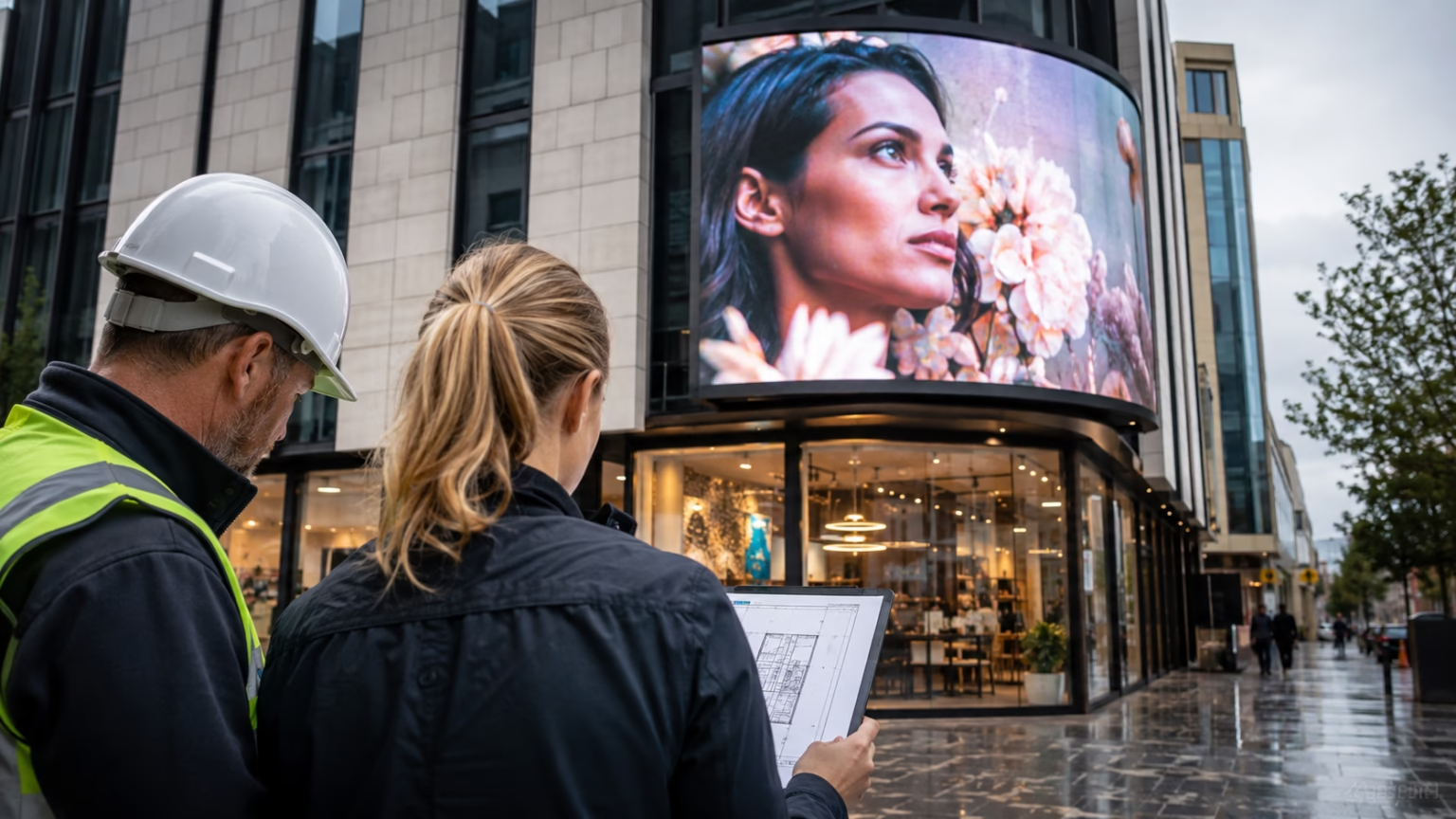
LED screens are a powerful way to bring attention to a shopfront, commercial building, venue or public space. They are bright, flexible and far more dynamic than traditional signage.
However, because LED screens are illuminated and often visible from public areas, they may be subject to planning rules or advertisement consent. Before installing one, it is important to understand what approvals may be needed and what a local authority is likely to consider.
Do LED screens need planning permission?
In many cases, an LED screen may require advertisement consent, rather than standard planning permission.
This can apply to external LED screens, digital advertising displays, illuminated shopfront signage, freestanding digital totems, and screens placed behind glass if they are clearly visible from outside.
The exact requirements depend on the location, size, brightness, content, mounting method and how the screen is used. Local authorities may take a different view depending on the setting, especially if the display is near roads, residential properties, listed buildings or conservation areas.
What do councils usually consider?
When reviewing LED screens or illuminated signs, local authorities usually focus on two main areas:
Amenity
This considers how the screen affects the appearance of the building, street or wider area. A screen that feels too large, too bright or poorly integrated may raise concerns.
Public safety
This considers whether the screen could distract drivers, cyclists or pedestrians, particularly near roads, junctions, crossings or busy public spaces.
Councils may also consider brightness levels, operating hours, animation, content movement, light spill and the cumulative impact of other signs nearby.
Brightness and content control
Brightness is one of the most important considerations for LED screens.
A good commercial LED display should be clear and visible without being overpowering. In many cases, automatic brightness control is recommended so the screen can adjust between daytime, evening and night-time conditions.
Content may also need to be carefully managed. Fast-moving animation, flashing graphics or rapid transitions can be more difficult to approve, especially in roadside or sensitive locations. Static or gently changing content is often more appropriate.
Sensitive locations
Extra care may be needed where a screen is proposed:
- On or near a listed building
- In a conservation area
- Near residential properties
- Close to roads or junctions
- In historic town centres
- In areas with existing signage clutter
In these settings, the size, brightness, fixing method and visual impact of the screen become especially important.
What information might be needed?
If consent is required, a planning or advertisement consent application may need details such as:
- Screen size and location
- Drawings or elevations
- Mounting and fixing method
- Brightness levels
- Operating hours
- Content type
- Distance from roads or neighbouring properties
- Visuals showing the screen in context
Providing clear information from the start can help avoid delays and reduce the risk of objections.
How Luminix can help
Luminix designs, supplies, installs and maintains commercial LED screens and digital signage systems across the UK.
While we do not provide formal planning advice, we can support your project with technical information, product details, drawings and installation guidance that may be useful as part of a planning or advertisement consent process.
By considering brightness, content, fixing methods and long-term maintenance from the start, we help ensure LED screen installations are practical, professional and built around the environment they are placed in.
Final thoughts
LED screens can make a strong visual impact, but they need to be considered carefully. The best installations are not simply the biggest or brightest. They are the ones that suit the building, respect the surrounding area and are designed properly from the beginning.
Before installing an LED screen, always check whether consent may be required and make sure the display is appropriate for its location.